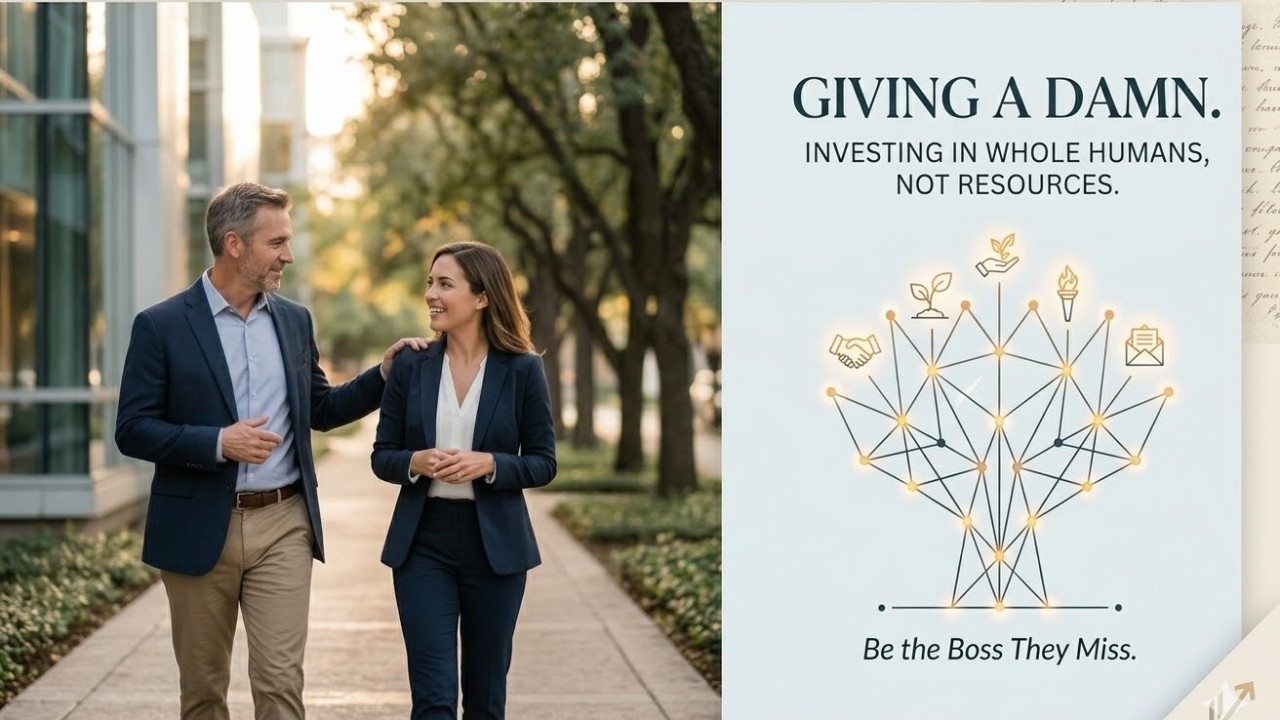
I’ve been thinking a lot lately about what it means to actually lead people. Not manage them. Not delegate at them. Not schedule their one-on-ones and call it mentorship. I mean the messy, inconvenient, sometimes heartbreaking work of genuinely giving a damn about the humans who show up for you every day.
And I want to be honest: I haven’t always been good at this. There was a version of me (younger, dumber, convinced that “high expectations” was a personality trait and not a management crutch) who thought leadership was about being the smartest person in the room. I cringe thinking about some of the ways I handled things early in my career. The times I prioritized being right over being helpful. The times I mistook intensity for impact.
But I got lucky. Along the way, I had leaders who invested in me when I didn’t deserve it. Who saw something in me I couldn’t articulate yet and gave me room to stumble into it. Who told me hard truths at exactly the right time, and who, critically, didn’t give up on me when I initially ignored those truths because I was too stubborn to listen.
I owe those people everything. And somewhere along the way, paying that debt forward stopped feeling like an obligation and started feeling like the entire point.
The hire you keep making
There’s someone I’ve hired three times now. Three different companies, three different chapters of both our careers.
The first time, they were green. Talented, sure, but raw in the way that makes you hold your breath a little when you hand them something important. I saw the potential, took the bet, and watched them grow into the role faster than I expected. When our paths diverged, I figured that was that; good run, wish them well, move on.
Then a few years later, I’m building a team somewhere else, and I think: I know exactly who I need for this. So I made the call. They’d leveled up. The raw edges were polished. The instincts I’d seen early had matured into real capability. They crushed it.
And then it happened a third time. Different company, different challenge, same phone call. “Hey, I’m building something. You in?”

Here’s what I want you to understand about that story: it’s not about me being a great talent scout. It’s about what happens when you invest in someone as a whole person, not just as a resource on your org chart. When you do that, when the relationship is real, it transcends any single company or role. You build something that lasts beyond the badge they’re wearing.
That person has grown enormously over the arc of our working relationship. But here’s the part that keeps me humble: I’ve grown too. Every time I’ve brought them on, they’ve taught me something about how to be a better leader. The investment has never been one-directional.
The best thing I ever did was lose
A few years back, I had someone on my team who was exceptional. One of those people who makes everyone around them better just by existing in the same Slack channel. The kind of contributor you build plans around.
And I could see they were ready for more. The problem was, I didn’t have “more” to give them. Not in my org, not in that company, not in any way that would be honest growth versus a made-up title to keep them from leaving.
So I did the thing that every management book tells you is noble but every manager’s gut tells you is insane: I proactively found them a role. Outside my team. Outside my company.
I picked up the phone, called people in my network, and said, “I have someone you need to meet. They’re going to be incredible, and the opportunity you can offer them is bigger than what I’ve got right now.”
Let me tell you how that felt in the moment: terrible. It felt terrible. I was voluntarily giving up one of my best people and making my own life harder in the process. My team would feel the gap. My metrics would take a hit. My boss was going to have questions.
But here’s the thing nobody tells you about leadership: sometimes the right call for your people is the wrong call for your spreadsheet, and you have to be okay with that.
They took the role. They thrived. And years later, that relationship is still one of the most meaningful professional connections in my life. Not despite the fact that I helped them leave, but because of it.
You want to know the ROI on that decision? It’s not measurable in any dashboard. It lives in my chest. It’s the knowledge that when the moment mattered, I chose their growth over my convenience. That’s the kind of thing that lets you sleep at night.
The letter
I recently transitioned out of a role, and during the process of wrapping things up (you know, the handoffs, the documentation, the awkward goodbye video calls) I received a letter from someone on my team.
I’m not going to share the details because they’re personal and they belong to that person, not to LinkedIn. But I’ll tell you what it did to me: it broke me open. In the best possible way.
This was someone who had grown tremendously during our time working together. When I think about where they started and where they are now, the delta is staggering. Not because I’m some genius developer of talent, but because they did the work. They showed up, took the feedback (even when it stung), leaned into the uncomfortable growth moments, and became someone who can lead.
The letter said things about the impact our working relationship had on their career and their confidence that I didn’t know I’d earned. It referenced specific moments I barely remembered but that had apparently mattered enormously to them. It was a window into the version of me they experienced, a version that was apparently better than the one I see in the mirror most days.
I cried. I’m not too proud to admit it. Not ugly-cried like someone had surprised me with a video montage set to that Sarah McLachlan song kind of crying, but I teared up a bit at their kind words and praise.
And then the kicker: learning that this person, someone I’d poured into, challenged, supported, and watched grow, was in the conversation to step into the role I was leaving. The idea that the person replacing me might be someone I helped develop? That’s not a career achievement. That’s a legacy moment. That’s the thing that actually matters.
The part where I don’t preach
I could wrap this up with some tidy framework. Five steps to being a leader people miss. A numbered list of actionable takeaways you can screenshot and post to your story.

But I’m not going to do that, because leadership isn’t a framework. It’s a practice, and most days you’re practicing badly. 10,000 hours, and all that.
I still get it wrong. I still have conversations I wish I’d handled differently. I still catch myself in moments where my ego is driving when empathy should be at the wheel. Life is easier when you’re young and still know everything about everything. The difference between now and ten years ago isn’t that I’ve figured it out; it’s that I’ve finally stopped pretending I have.
What I do know is this: the moments in my career that have meant the most to me have absolutely nothing to do with promotions, titles, or the size of my budget. They’re about people. The ones I hired three times. The one I helped leave. The one who wrote me a letter that made me cry.
Your team isn’t a resource pool. They’re not headcount. They’re not FTEs on a capacity plan. They are whole, complicated, ambitious humans who are trusting you with a portion of their finite careers. That’s an enormous responsibility, and it deserves more than performance reviews and pizza parties. Don’t get me started on the ridiculous executives who call them “human capital,” either. Sheesh.
Invest in them like they matter. Because they do. And here’s the selfish secret nobody talks about: when you pour into people with genuine intention, not performatively, not strategically, but because you actually care about their lives, it comes back to you in ways that make every other professional accomplishment feel hollow by comparison.
Be the boss they miss when you leave. Not because you were cool or easy to work for, but because you saw them. Really saw them. And you made sure they knew it.
That’s the whole game. Everything else is just spreadsheets.
Originally published on LinkedIn.